PUBLIC HEALTH
The Global Health Trifecta: Alcohol, UPFs and Mental Health
An overview of the shared mechanisms between alcohol, ultra‑processed foods and how they intersect with mental health

R
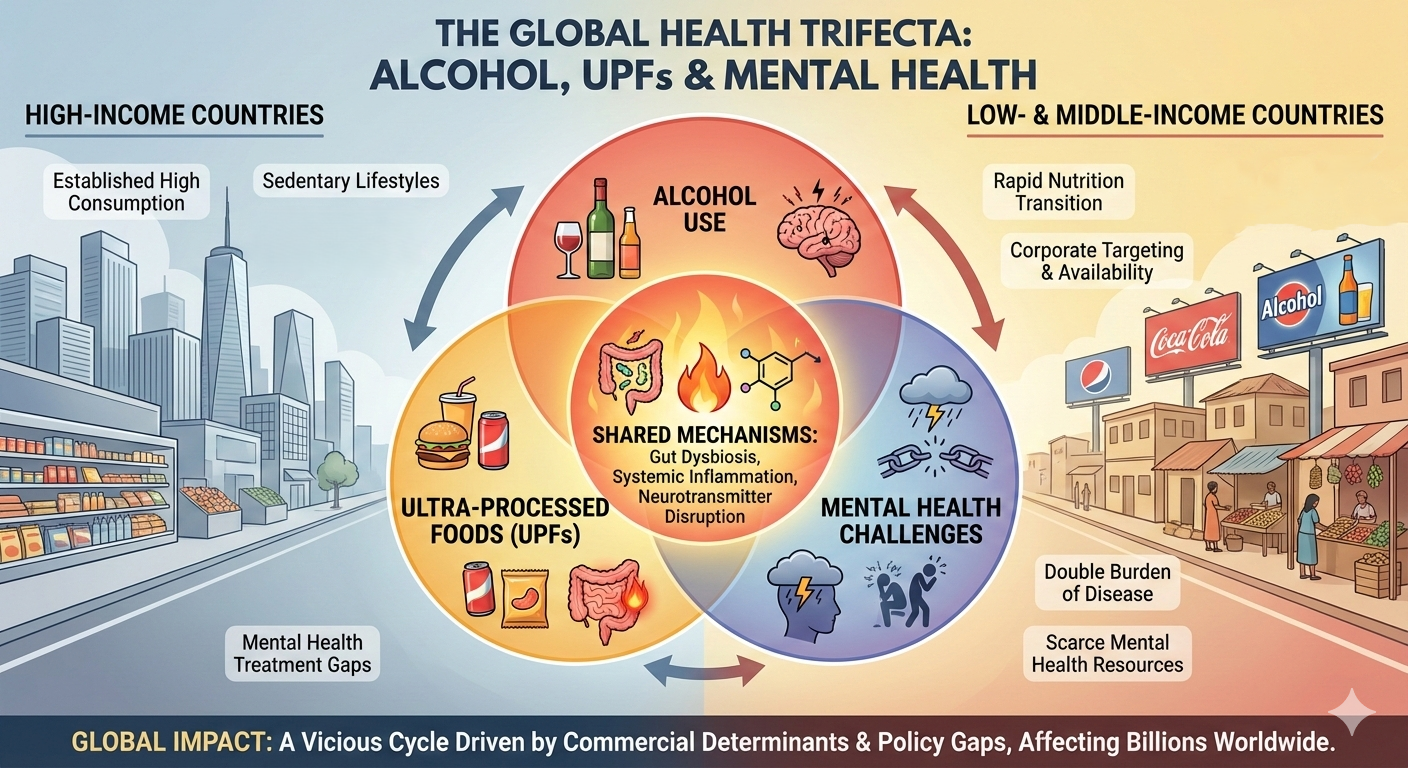
ecent research reveals a synergistic ‘trifecta’ where alcohol consumption and ultra‑processed foods (UPFs) act as primary drivers of the escalating global mental health crisis affecting both high‑income (HIC) and low‑ and middle‑income countries (LMIC).
When combined, alcohol and UPFs influence each other through biological and social pathways increasing risk of mental health conditions and complicating treatment.
How this Trifecta Impacts the Gut and Brain
Gut Dysbiosis: Both alcohol and emulsifiers/ additives in UPFs induce gut dysbiosis and increase intestinal permeability known as ‘leaky gut’. This allows pro-inflammatory cytokines to enter the bloodstream, eventually crossing the blood-brain barrier.
Systemic Neuroinflammation: Chronic consumption of UPFs, often high in trans-fats and refined sugars and alcohol promotes a state of chronic, low-grade inflammation. This neuroinflammation is a known precursor to major depressive disorder and anxiety.
Neurotransmitter Disruption: High UPF intake is linked to a 20–50% increased risk of depression, partly due to the disruption of brain lipid membranes, which impairs the signaling of serotonin and dopamine.
Alcohol
2.6 million deaths annually
4.7% of all deaths (2019)
Alcohol raises risk of dependence, mood disorders, social harm, injuries, noncommunicable diseases and worsens some mental‑health outcomes.
Global per‑capita consumption varies widely with many high‑income countries exceeding on average 8–10 litres of pure alcohol per adult per year.
Ultra‑Processed Foods
UPFs can supply up to 50-60% of total daily energy intake in some high‑income countries; sales are rising rapidly across middle‑income countries.
UPFs are energy‑dense, nutrient‑poor, engineered products for overconsumption, high in refined sugars, additives and low in nutrients. They can displace traditional diets or wholefoods and are associated with higher risk of depression and anxiety.
UPF consumption and alcohol harms often concentrate among disadvantaged groups because of affordability, marketing and local food environments.
Mental Health
In 2021 there were 444 million incident cases and more recently an estimated 1 billion people globally are living with a mental health or neurodevelopmental condition.
Depression and anxiety are major contributors to global disability, with about 155 million disability-adjusted life years (DALYs) from mental disorders. DALY rates measure how much illness and disability a condition causes in a population and higher age‑standardised DALY rates mean mental disorders cause more health loss per person in that region.
Mental‑health DALY rates vary by region with high‑income regions often showing higher age‑standardised rates, but LMICs carry large absolute burdens.
Low- and Middle-Income Countries compared to High Income Countries
LMICs are undergoing a rapid ‘nutrition transition’ and experiencing fast UPF sales growth and rising alcohol harms as markets shift.
As global food systems industrialise, transnational corporations aggressively market cheap, hyper-palatable UPFs and alcohol. This creates a double burden of disease where populations face undernutrition conditions like stunting due to nutrient deficiencies, as well as rising rates of obesity, type 2 diabetes and mental health conditions, often without the accessible healthcare infrastructure to treat them.
Whereas, in high‑income countries this trifecta is often driven by sedentary lifestyles and by the availability, affordability and aggressive marketing of alcohol and UPFs. These settings typically show very high UPF market shares and entrenched patterns of alcohol use, which together amplify harms to mental health.
Moving Forward
Research highlights that these three issues are often driven by the same corporate strategies: high availability, low cost, and aggressive marketing.
Tackling the trifecta means shifting the focus from individual responsibility to policy‑level action, for example, pricing and marketing controls, front‑of‑pack warning labels, and healthier retail environments. The WHO’s “Best Buys” recommend measures such as marketing restrictions and warning labels to protect population mental well‑being.
Other effective policies include taxation and minimum pricing for alcohol and UPFs, tighter marketing limits, and fiscal and retail measures to reduce UPF availability. These should be paired with efforts to embed mental health and substance use care into general health services so more people can access help.



by Alexandra Dowding
20th January 2026